Dingo Bar
A Moveable FeastDingo Bar, on rue Delambre in Paris, is where Ernest Hemingway first met F. Scott Fitzgerald and witnessed a disturbing change in Fitzgerald’s appearance during an evening of champagne and talk. Its importance in the memoir comes from this encounter: a social introduction becomes an unnerving scene that Hemingway recalls years later and that Fitzgerald seems not to remember.
Setting and Use
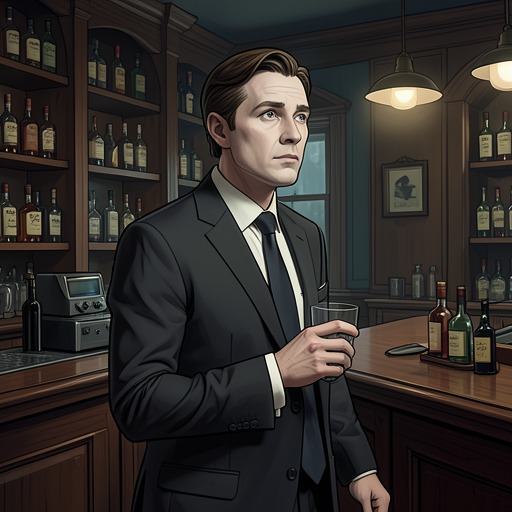
The account identifies Dingo Bar by its location on rue Delambre and by the company Hemingway was keeping there: people he regarded as worthless. It supplies few details of the bar’s surroundings. Instead, the scene takes shape around its occupants, the drinks, and the conversation, with the bar stools becoming the place from which Hemingway studies Fitzgerald closely.
Fitzgerald’s First Visit
Fitzgerald entered with Dunc Chaplin, introduced himself, and presented Chaplin as a famous pitcher. Hemingway had never heard of Chaplin because he had not followed Princeton baseball, but found him relaxed, friendly, and more appealing than Fitzgerald. Fitzgerald ordered champagne, and the three men drank together with some of the other people present.
Fitzgerald spoke at length about Hemingway’s writing and praised it extravagantly. Uncomfortable with praise delivered to his face, Hemingway watched him instead of following the speech closely. He noticed Fitzgerald’s carefully fitting Brooks Brothers clothes, white button-down shirt, and Guard’s tie, which Fitzgerald had bought in Rome. The first bottle was finished and a second begun as the speech started to run down.
The Champagne Episode
As Fitzgerald sat holding a glass, Hemingway noticed sweat gathering on his upper lip. Then, in Hemingway’s description, Fitzgerald’s face seemed to tighten: its puffiness vanished, his eyes sank, his lips drew taut, and the color drained until his face resembled a death mask. Hemingway asked whether he was all right. The memoir presents the change as something he witnessed, while leaving its cause uncertain.
The men got Fitzgerald into a taxi. Chaplin reassured Hemingway that Fitzgerald would probably be all right by the time he got home. The abrupt departure gives the bar scene a sharp turn: the evening’s talk and drinking end not with a social farewell but with Hemingway worried about his new acquaintance.
Later Recollection and Significance
A few days later, Hemingway encountered Fitzgerald at Closerie des Lilas and apologized for the way the champagne had affected him, suggesting that they might have drunk too quickly while talking. Fitzgerald responded as though he did not know what Hemingway meant and asked what had happened at Dingo Bar. The memoir does not resolve this discrepancy; the denial instead leaves the incident suspended between Hemingway’s vivid recollection and Fitzgerald’s apparent failure to recall it.
Dingo Bar thus serves as the scene of both an introduction and an early uncertainty in Hemingway’s relationship with Fitzgerald. The remembered details—the second bottle, the sweat on Fitzgerald’s lip, the death-mask change, and the taxi—make the meeting feel unusually charged, while the later conversation at Closerie des Lilas returns the reader to the question of what Fitzgerald experienced or remembered.